


Sustainability is on everyone's lips, and it is important. It's about us and our future, about a healthy environment, healthy people, a fair and just world for everyone. Come along and discover good examples in Thuringia – certified spots, sustainabel offers, national natural landscapes and more!
A classic scene setup
World Heritage in Weimar
Weimar's World Heritage sites are closely related, and the city of culture contains a total of 19 UNESCO World Heritage Sites. The "Klassisches Weimars" ensemble consists of 16 artifacts, whilst the Bauhaus and its sites in Weimar, Dessau, and Bernau include three Weimar-related objects. Every corner of literary history and genius encounters breathes in Weimar, where culture lives: Johann Wolfgang Goethe, Friedrich Schiller, Martin Wieland, and Gottfried Herder were the most important classical era representatives, influencing women such as Duchess Anna Amalia and Grand Duchess Maria Pavlovna. We've highlighted a few chosen masterpieces, along with the people and stories behind each site.
1st Episode: A Widow, Much Too Young
Anna Amalia's situation is not easy: she marries at 16, becomes a mother at 18, and is already a widow at 19. When the princess gives birth to her second son at Weimar's city palace, her tuberculosis-stricken husband, Duke Ernst August II, remains alive. Constantine of Saxe-Weimar-Eisenach is no longer.
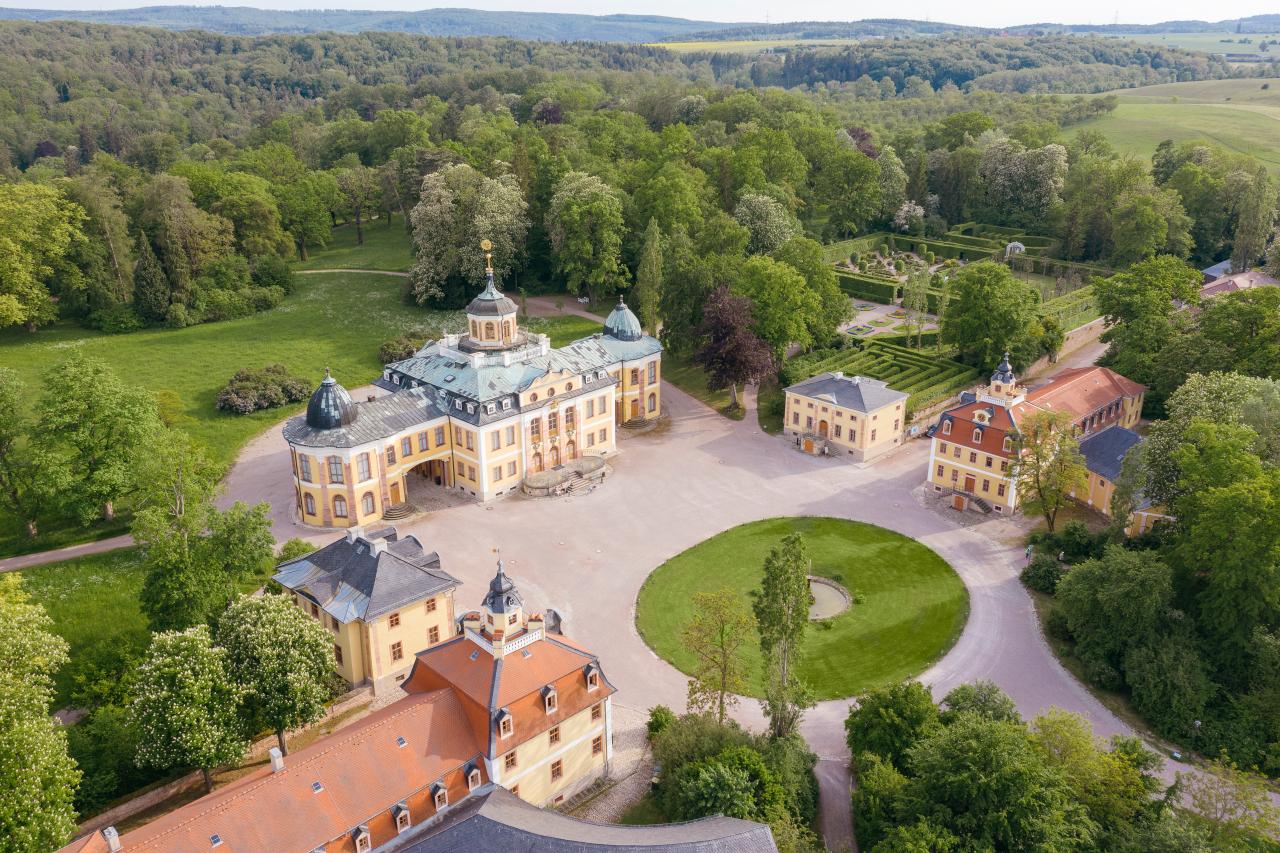
Schloss Belvedere in Weimar aus der Vogelperspektive ©Marcus Glahn, Stiftung Schloss Friedenstein Gotha
Anna Amalia, Frederick the Great's niece, and her husband shared a love of art. The two construct a court theatre and live three times a week at performances, sometimes in the natural theater of Belvedere Palace. It is still worthwhile to walk through the wide park, which includes a Russian garden and maze. Goethe and Anna Amalia's eldest son studied plants here.
⠇

2nd Episode: The Broken Shoes
The young woman persuades the Emperor of Vienna to acknowledge her as a duchess until Carl August's pedigree matures. A woman as the head of the Duchy of Weimar-Saxony is a revolutionary idea! Anna Amalia is 36 years old when she abdicates and relocates to the Wittumspalais, where tourists can stroll through the corner room where the Duchess mother conducted her table rounds. The furnishings in the room are typical of Victorian home design and reveal Anna Amalia's diverse interests.
In the summer, Anna Amalia lives in Tiefurt Castle or Ettersburg. And Anna Amalia understands how to live: she sniffs tobacco and wears new shoes every day.
3rd episode: Goethe enters the scene
Goethe travels to the Thuringian in 1775.The reason? The young Duke Carl August needs a guide and confidants. The 26-year-old poet becomes secret legation council, Herder on Goethe’s suggestion superintendent. Goethe’s house and the town church of St Peter and Paul are also part of the UNESCO-Ensemble Klassisches Weimar.
⠇
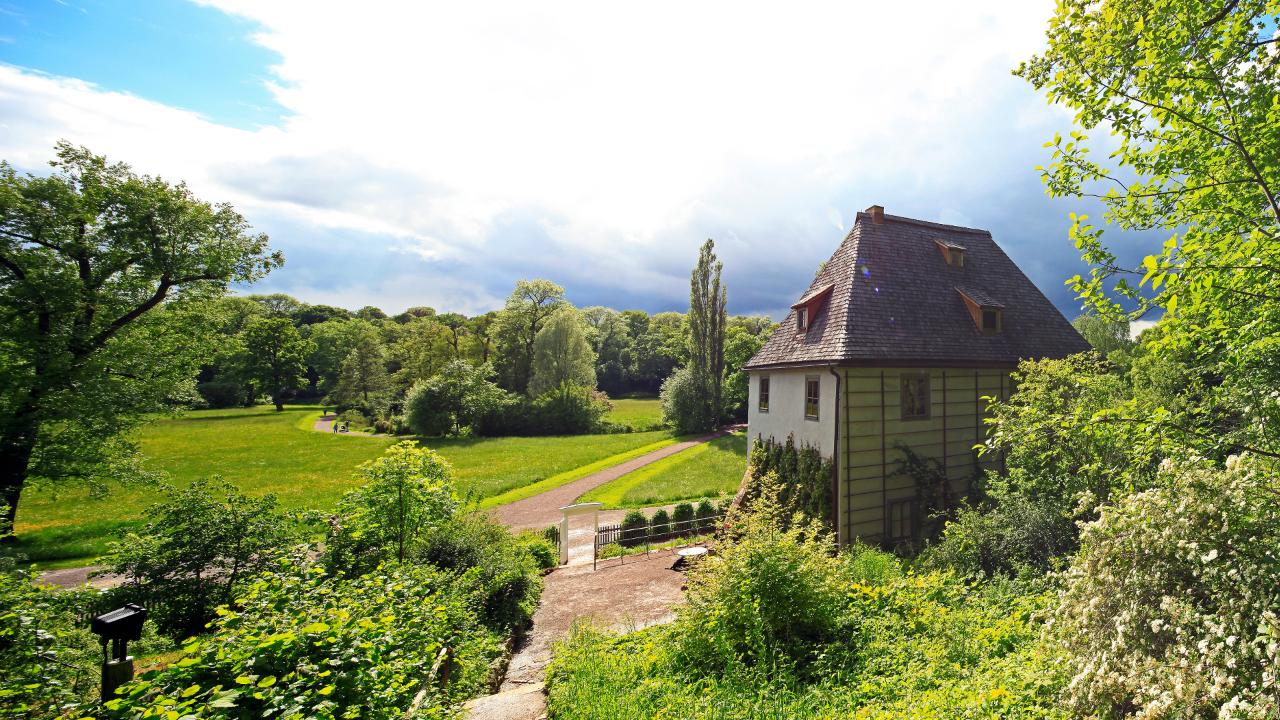
The poet prince from Frankfurt oversees war, road development, and finances. As a librarian, he constructs the Duchess Anna Amalia Library with its famed Rococo hall and designs the park at Ilm, which includes a garden house and a Roman house.
For nearly 50 years, Goethe lived and worked in the Frauenplan house, as if the great genius had just left his study. For the poet and statesman, as well as his family, it was more than just a place to live and work: the spaces built to reflect his artistic values and diverse interests facilitated sociability and cultural and scientific exchange.
The Goethe National Museum houses the poet's home chambers, as well as the multimedia permanent display "Life Floods - Tatensturm".
4th Episode: Where is Schiller?
The coffins of the two late friends Schiller and Goethe stand next to each other in the Fürstengruft, which is surrounded by a historic cemetery with old trees and gravestones dug into the grass. The last resting site of the Weimar dukes lies north of the Goethe House, where a visitor has left a red rose in the poets' coffins. Was he aware that Schiller's coffin was empty? In 2008, an international study team discovered that the bones in the coffin were not those of the poet.
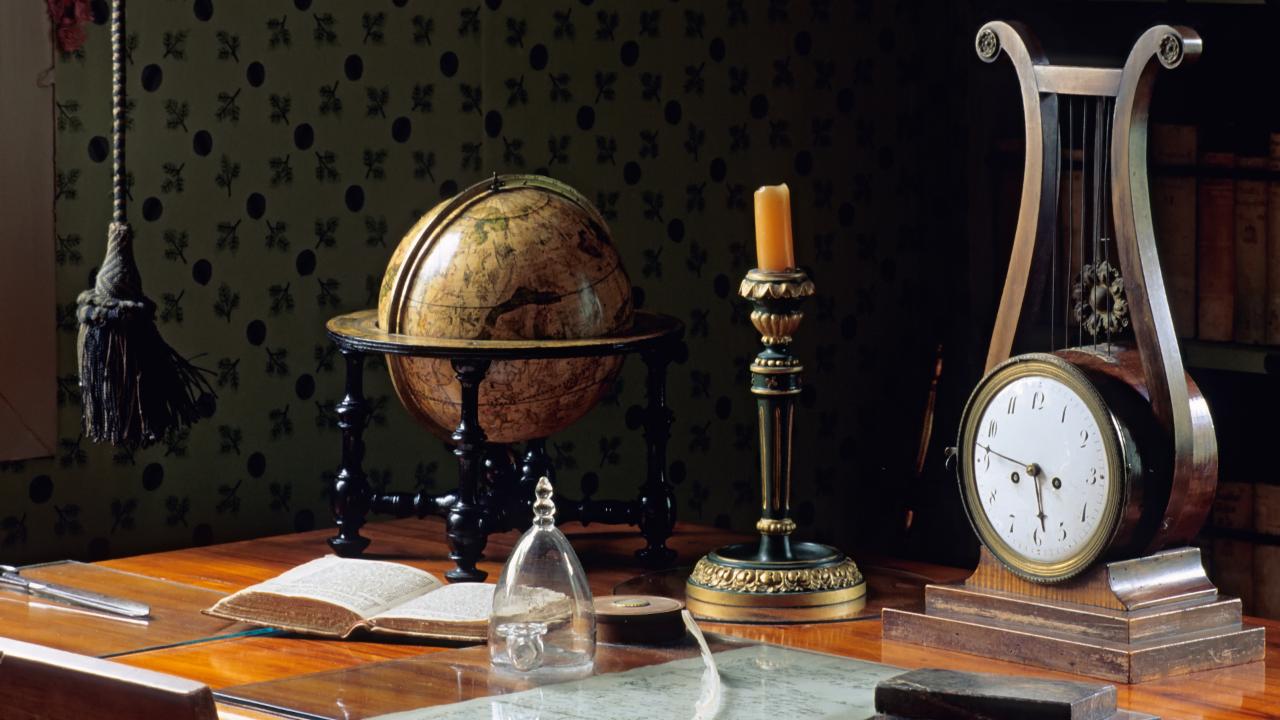
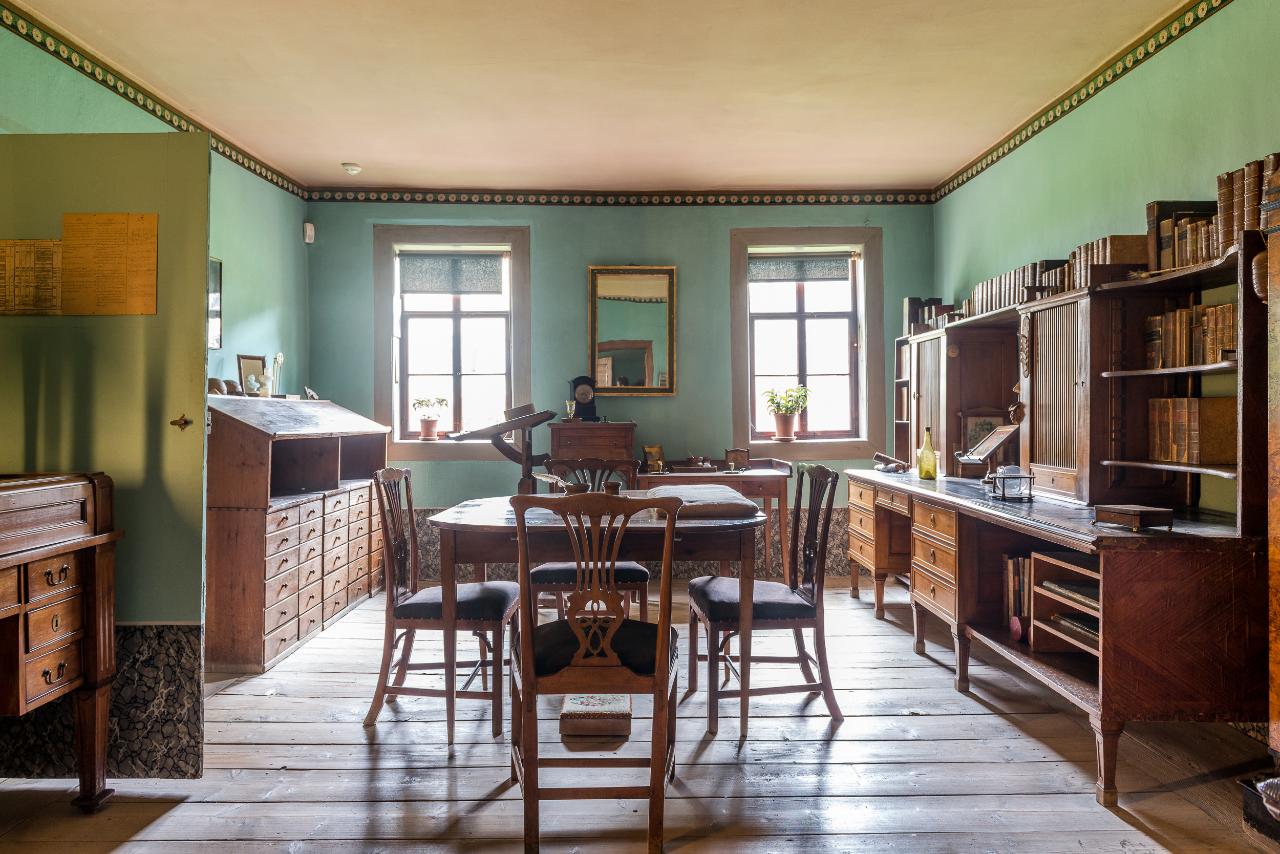
Arbeitszimmer Schillerhaus in Weimar ©Paul Smit, Thüringer Tourismus GmbH
5th Episode: Was it poison at the end?
Neither the skull in question nor the dead remains in the coffin came from Schiller. So, the researchers can't determine what caused the man's death; was it tuberculosis? Was it a heavy metal poisoning that he could have contracted in his own apartment building? The examination of old wallpaper remains supports this assumption.
Today, visiting the Schiller House poses no health risks. The old wooden floorboards creak as you ascend to the second level of Friedrich Schiller's private apartments. Candlesticks, a clock, and a globe sit atop the master's desk. On the desk, the quill is placed on a piece of paper.
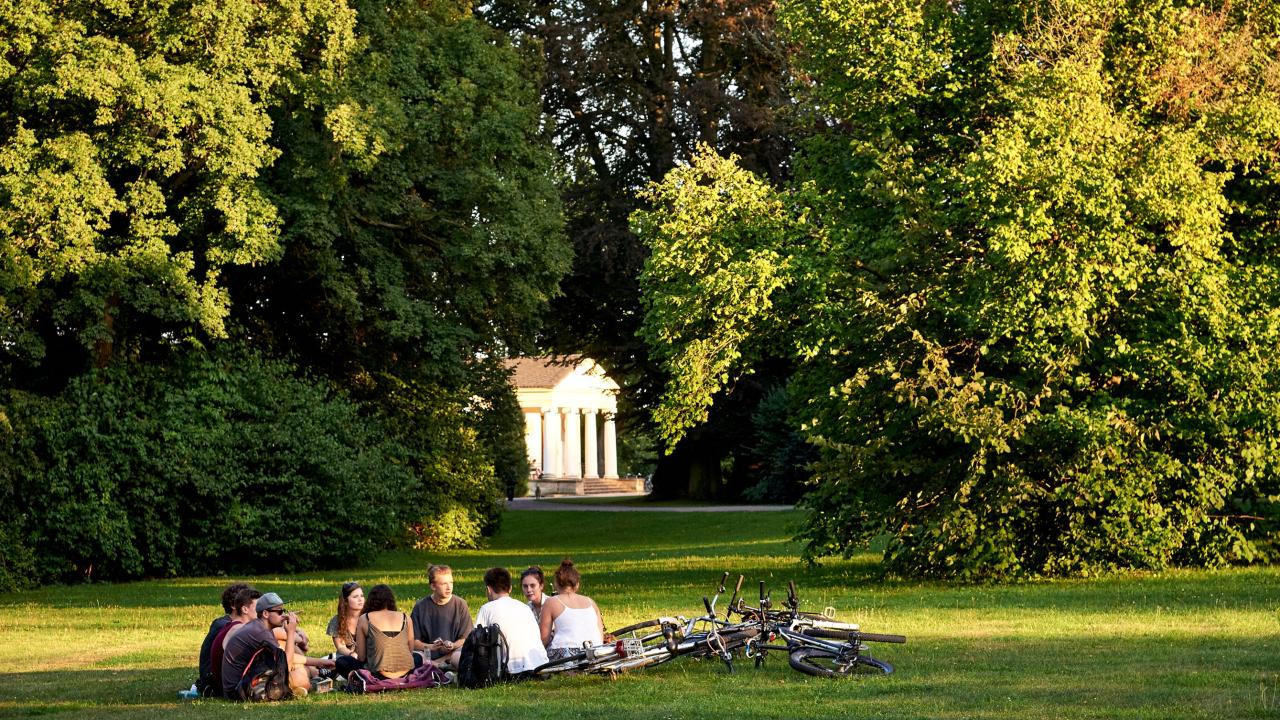
Park an der Ilm, Römisches Haus ©Samuel Zuder, Cross Media Redaktion
6th Episode: Walking in the Park
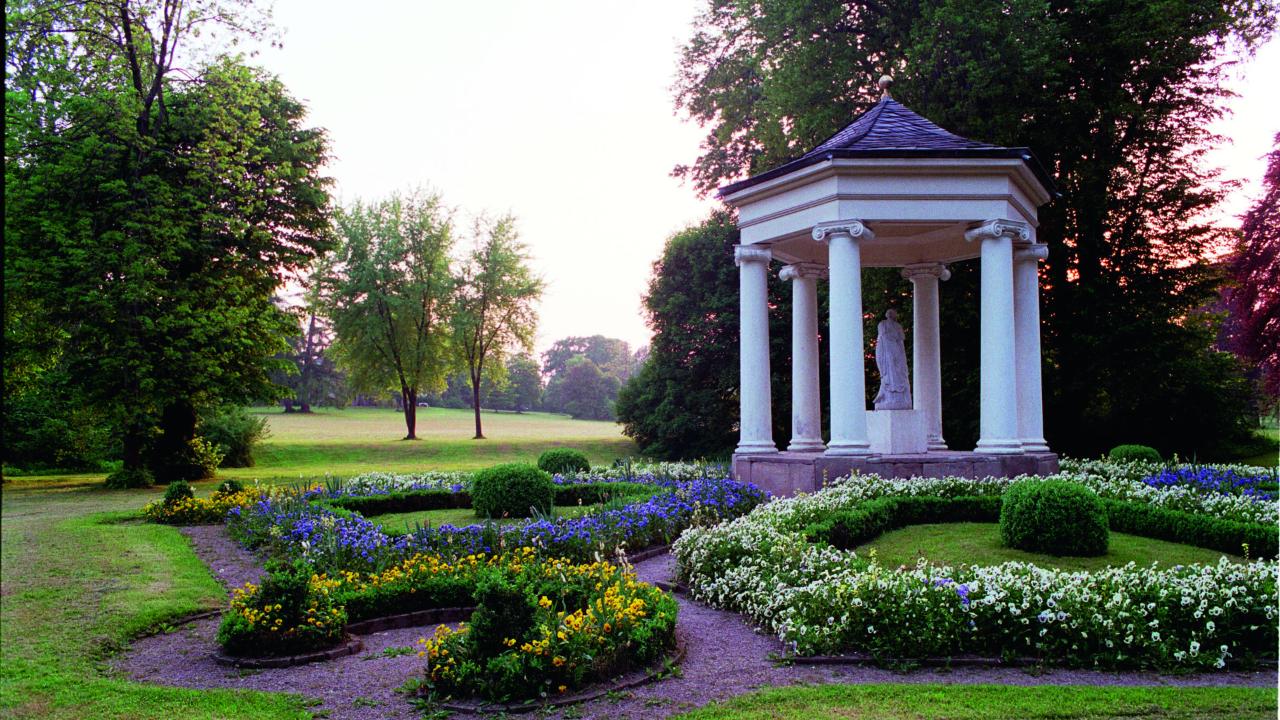
Today, Weimar could be described as a city in a park rather than a city with a park. When you go through the park along the Ilm River, you quickly become accustomed to the sheep mowing the grass in the meadow. It's nice to walk here, inspired by the same vista that Goethe had from his garden house.
In 1919, young individuals arrive in Weimar with fresh ideas about art and design, and at night, they throw a wild party in the park. Many locals are horrified by the Bauhäusler, but this is only another chapter in Weimar's cultural history.
⠇
An experience for all
The weimar GmbH offers guided tours in German sign language. Some museums of the Klassik Stiftung Weimar have mobile audio loops for the audio guides or media guides with videos in sign language. Tactile models and plans as well as guided tours by audio description are offered for people with visual impairment. A path through the city centre with its main sights leads to many places over historic cobblestones. The city leaders of weimar GmbH adapt their route and pace to local conditions and the needs of people with mobility restrictions. Ein Weg durch die Innenstadt mit den wichtigsten Sehenswürdigkeiten führt an vielen Stellen über historisches Kopfsteinpflaster. Die Stadtführenden der weimar GmbH passen sich in Routenführung und Tempo den örtlichen Gegebenheiten und den Bedürfnissen von Menschen mit Mobilitätseinschränkung an.
Head picture: ©Jens Hauspurg, Thüringer Tourismus GmbH
Discover more ...

Special barrier-free offers in Thuringia
The Toskana Therme and the Hotel an der Therme in Bad Sulza - in the middle of the gently rolling hills of the Tuscany of the East - offer everything you need for a holiday and relaxation.
(Photo: Stefan Hopf / Toskana World GmbH)


